
SEAGLOW PILOTS
SEAGLOW is testing different technological applications on four vessels in Denmark, Estonia, Norway and Sweden, representing a range of small-scale fishing boats with different operating conditions in the North and Baltic Sea basins.
Pilot 1
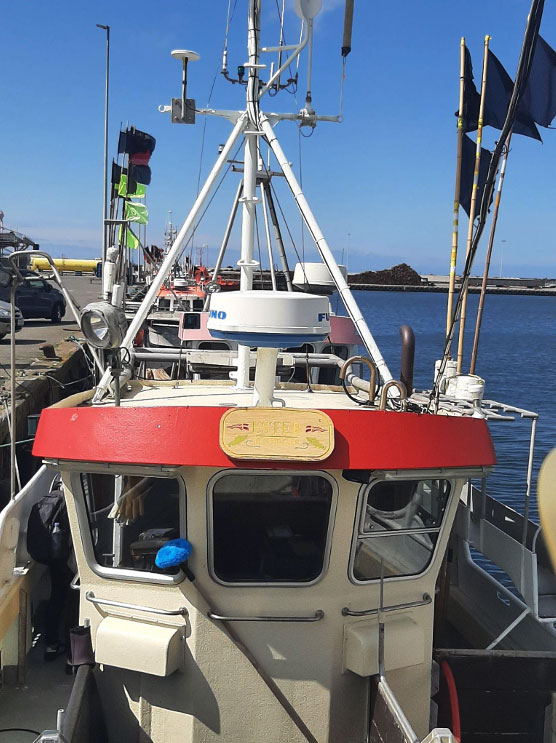
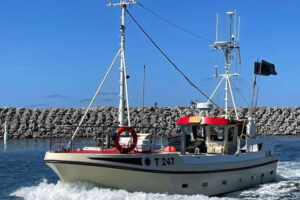
Ester T247
Denmark
Nordsee
Milestones & Timelines
- Baseline measurements: completed
- Technology selection decision: completed
- Retrofitting timeline: Autumn 2026
- Operational performance monitoring: 2026/2027
Latest News
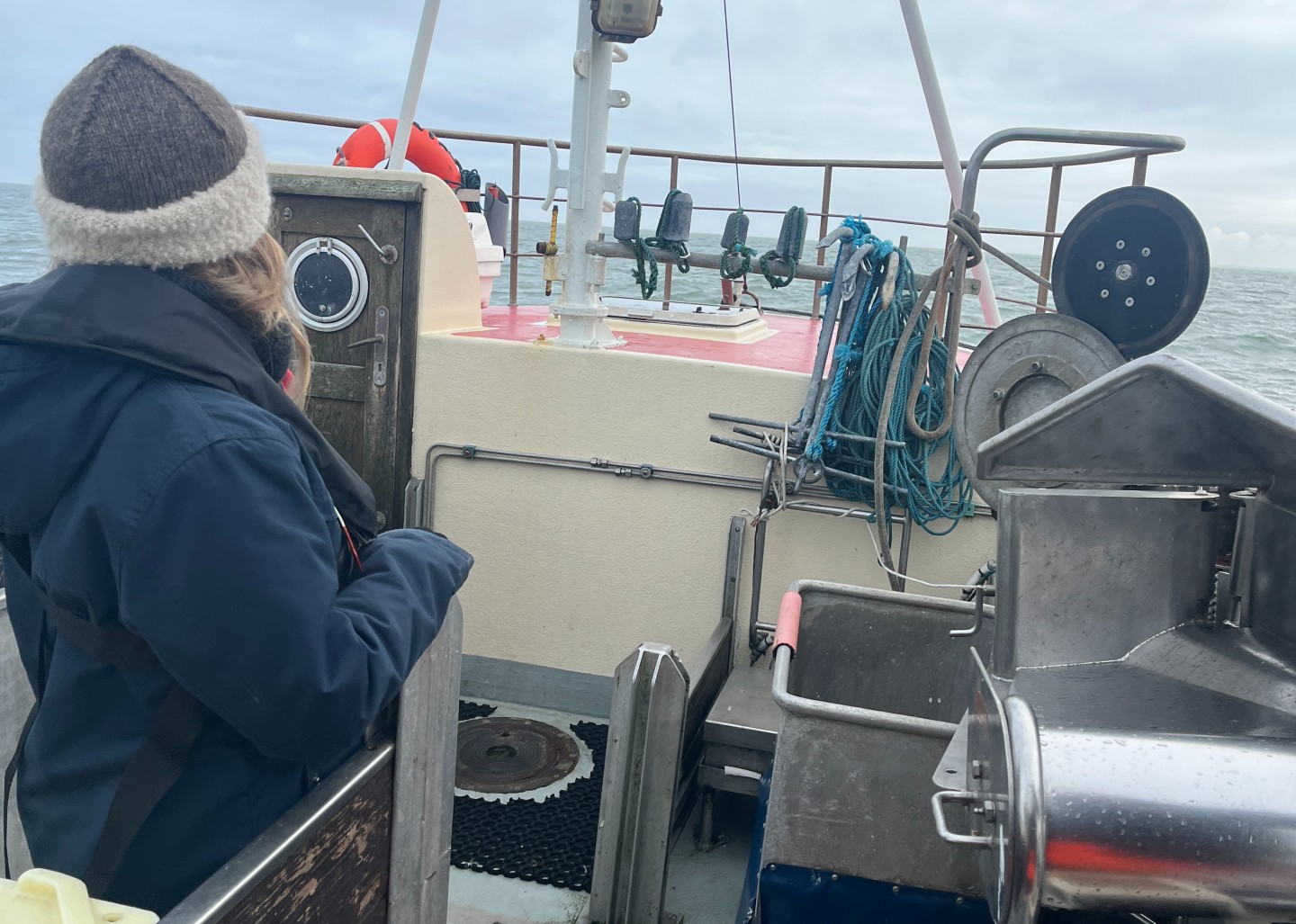
Messen, was zählt: Wie SEAGLOW die Emissionen von Schiffen kartiert
Understanding how fishing vessels consume energy and produce emissions is a crucial first step towards reducing their environmental impact. As part of this effort, partners Danish Technological Institute (DTI) and AZTI have recently completed an extensive campaign of baseline and emission measurements across Seaglow’s four pilot fishing vessels operating […]

Ester T247 is a 10-meter line-and-hook fishing boat operated by fisherman and owner Allan Vestergaard. Working out of Hanstholm Port, on the northwestern coast of Jutland, Denmark, he fishes cod, haddock and hake using longlines and gillnets.

Pilot 2
Valentina
Schweden
Nordsee
Milestones and timelines
- Baseline measurements: completed
- Technology selection decision: completed
- Retrofitting timeline: April 2026
- Operational performance monitoring: 2026/2027
Latest News
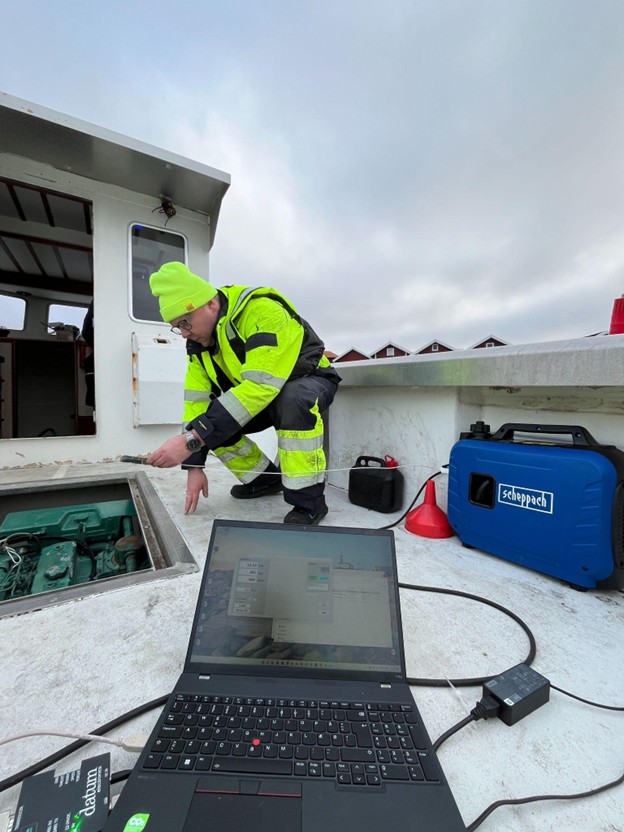
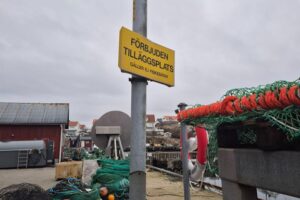
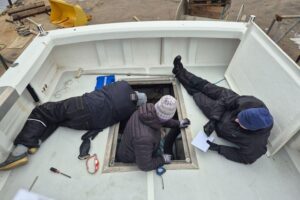
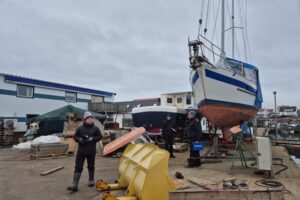
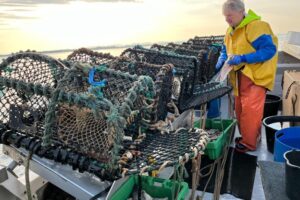
Valentina is 8-meter cage fishing boat operated by 2 persons. It operates near the coast and a typical trip starts with 1 hours of steaming towards the fishing ground. It is owned by Sweden’s Fishermen’s Producer Organization Economic Association (SFPO).

Pilot 3
PMA-605
Estland
Baltic Sea
Milestones and timelines
- Baseline measurements: completed
- Technology selection decision: completed
- Retrofitting timeline: late Spring 2026
- Operational performance monitoring: 2026/2027
Latest News

AZTI beginnt mit der Installation von SIMUL-Systemen zur Messung der Betriebs- und Energieverbrauchsmuster in den Schiffen des SEAGLOW-Projekts
On 7-8 November, scientists of Seaglow’s partner AZTI travelled to Võiste, Estonia, to install the data acquisition system named SIMUL. The installations were carried out on a small-scale fishing vessel that fishes for Baltic herring, with a fishing technique known as “kakuami”, in which two boats work together to catch […]

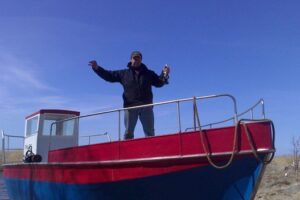
PMA-605 is a 11.5 m fishing vessel, operated by fisherman and owner Argo Mengel from a small bay close to Pärnu, Estonia. The vessel uses box traps or “kakuami”, where two boats work together to catch herring. Fish find their way to the standing fishing nets, one boat reaches the net to gently collect the fish and load the second boat, which transports the fish back to shore. During the low season, they do some smaller fishing of Zander and Perch. The boats involved in this fishery are also called kakuami.


Pilot 4
Anne Katharina
Norwegen
Nordsee
Milestones and timelines
- Baseline measurements: completed
- Technology selection decision: completed
- Retrofitting timeline: completed in October 2025
- Operational performance monitoring: ongoing
Latest News

Erprobung des Antifoulings von morgen: Die Ecoating-Anwendung auf der Anna Katharina
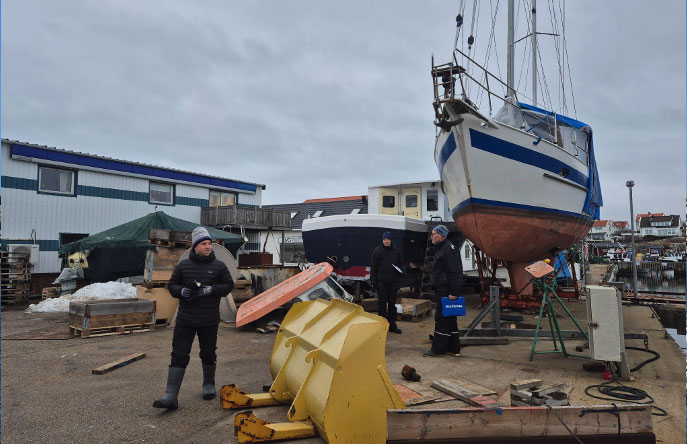
At the beginning of September 2025, the Norwegian fishing vessel Anna Katharina was hauled ashore at Kvitsøy for a comprehensive hull treatment. As part of the ongoing SEAGLOW project, the vessel was selected to trial an innovative antifouling technology intended to enhance durability and reduce environmental impact. The work was […]

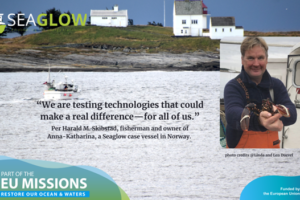
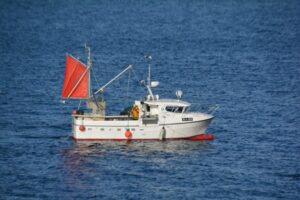
Anna Katharina is a 10.65-meter boat operated by one person equipped for pot and gillnet fisheries. It owned by fisherman Per Harald M. Skibstad. Ten months per year it is fishing lobster, Norway lobster, crabs. and pollock in the waters outside the home port in Tananger, Rogaland County (North Sea).


The Technologies
Ecoating – toxin-free marine hard coating from Clean Oceans Coatings (COC)
Biofouling – the accumulation of algae and shell organisms on vessel hulls – significantly increases hydrodynamic drag and can raise fuel consumption by up to 40%, resulting in higher emissions. Traditionally, this is addressed through toxic antifouling paints that require frequent reapplication and gradually release biocides and microplastics into the marine environment.
Within SEAGLOW, the COC E-coating will be tested and validated under real operating conditions on the four pilots. The coating is based on Polyramik®, a durable polymer matrix enhanced with nanoparticles, designed to reduce biofouling without the release of toxins, while maintaining long-term hull performance.
SIMUL technology
Digitalisation enables fishing activity to be monitored at a highly granular level, providing valuable insight into operational behaviour and energy use. However, due to the limited economies of scale and the technological constraints often faced by small-scale fisheries, monitoring solutions must remain both simple and cost-effective. By testing the SIMUL technology, Seaglow focuses on capturing operational and fuel consumption patterns using an approach that is economical, reliable and technologically streamlined.
The SIMUL device is a low-cost system designed to monitor fishing activity and fuel consumption in small fishing vessels. It is:
- Compact, making it suitable for installation on small vessels;
- Non-intrusive, as it does not require modifications to engine systems such as fuel lines, unlike conventional flowmeters;
- Cost-effective, with significantly lower costs compared to traditional fuel flow measurement systems.
Fuel consumption is calculated in real time based on engine rotational speed. The system continuously records vessel position, speed, engine RPM and estimated fuel consumption, while displaying this information directly to the skipper, supporting both operational awareness and more efficient energy use.
 German
  English
  Danish
  Dutch
Dutch  Estonian
  Finnish
  French
  Latvian
  Lithuanian
  Norwegian
  Polish
  Swedish