
Multi-stakeholder dialogue in Estonia: What do small-scale fishers need from the energy transition?
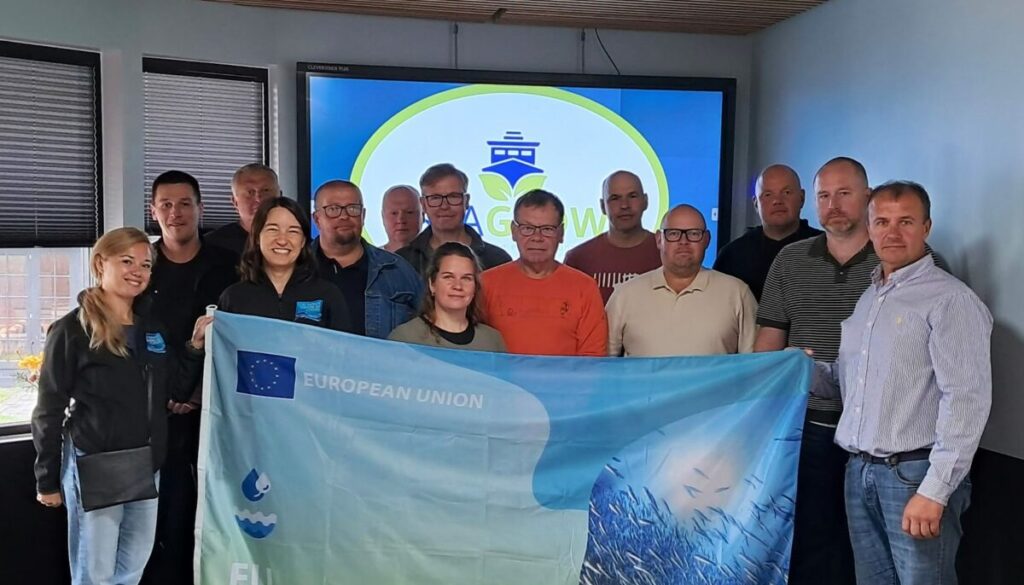
On 19 September 2026, SEAGLOW consortium partner Low Impact Fishers of Europe (LIFE) joined local fisherman and boat owner Argo Mengel at Võiste Port to bring Estonia’s small-scale fishing community into the conversation about a cleaner maritime future. Facilitated by Riina Otsason of Tallinn University of Technology, the workshop brought together fishers and maritime stakeholders to discuss a practical question: can small fishing vessels cut emissions without sacrificing reliability or performance?
 PMA-605 goes hybrid
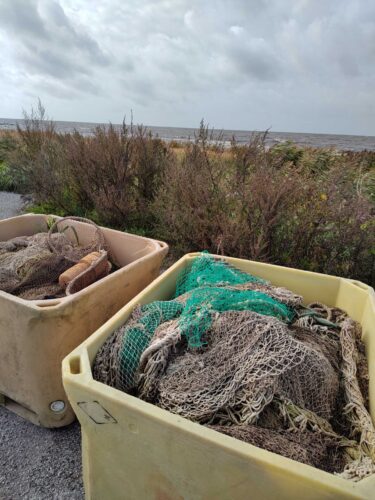
PMA-605 is a small vessel used mainly for Baltic herring fishing. Through SEAGLOW, it is being converted to a hybrid system combining an electric propulsion motor, battery storage and a diesel generator. Its hull is also being treated with an innovative e-coating.
The combination is expected to reduce fuel consumption by at least 40%. Electric operation should also make parts of the fishing process quieter and improve working conditions on board.
Promising, but it must work at sea
During the exchange, participants shared their views on the energy transition in Estonia.
Hybrid systems were seen as having the greatest potential to reduce CO₂ emissions. Electrification and the combination of electric propulsion with e-coating were also highlighted. However, participants were clear that new technology must prove itself under real fishing conditions. Some questioned whether fully electric propulsion could provide enough power and endurance in difficult weather or during longer operations.
Reliability concerns also extended to equipment such as winches. Participants noted that hydraulic systems and auxiliary engines may still be needed where electric alternatives cannot yet guarantee reliable operation and safe braking.
Technology readiness was therefore ranked as the biggest barrier to the energy transition. Financing came second, followed by infrastructure and access to skilled specialists.
The business case must add up
Lower fuel costs were the most frequently identified economic benefit, especially given fluctuating fuel prices. Participants also saw potential for sustainably caught fish to command a higher price.
The upfront cost of retrofitting remains a major obstacle. Around five years was generally considered an acceptable payback period, while anything longer was seen as difficult to justify amid uncertainty about future policies, taxes and legislation.
Most respondents felt that public funding or other incentives would need to cover between 80% and 100% of the investment. One suggested support of 60–80%. For small-scale fishing businesses, participants said, retrofits of this size would be hard to undertake without substantial outside support.
Cleaner vessels, better workplaces
Participants viewed lower CO₂ emissions as the main environmental benefit, alongside cleaner local air and possible benefits for the marine environment.
The transition could also improve everyday life on board. Less noise, vibration and exhaust exposure would create a cleaner and more comfortable workplace. Participants also felt that greener vessels could strengthen the fishing sector’s environmental reputation and help respond to consumer demand for responsibly caught fish.
Fishers want a stronger voice
Technology and funding were not the only concerns. Participants called for lower taxes, less bureaucracy and greater state support.
They also stressed that policymakers need a practical understanding of fishing. Closer dialogue with the sector could help ensure that regulations and support programmes reflect the realities of day-to-day operations.
Some participants felt that Estonia focuses more on implementing EU requirements than on actively representing the interests of its fishers. This was a stakeholder perception expressed during the workshop and was not independently assessed as part of the event.
Lessons for the next steps
The workshop showed that small-scale fishers see real potential in hybrid and electric technologies, but only when solutions are reliable, affordable and designed for actual fishing conditions.
The transition will require more than new equipment. Financial support, simpler administration, sector knowledge and meaningful dialogue with fishers will be just as important.
The feedback is not representative of Estonia’s entire small-scale fishing sector, but it nevertheless offers valuable practical guidance for the continued development and assessment of SEAGLOW’s PMA-605 demonstration.
Photo credits @Seaglow


 English
  Danish
  Dutch
Dutch  Estonian
  Finnish
  French
  German
  Latvian
  Lithuanian
  Norwegian
  Polish
  Swedish