
Seaglow Participation in EU Energy Transition Events – Brussels, February 2026
On 16–17 February 2026, Seaglow partners participated in two EU-level events in Brussels addressing the energy transition in fisheries and maritime sectors. The project contributed to the “CINEA Feedback to Policy Workshop” and the High-Level Conference “Navigating Change: Towards the Energy Transition in the EU”, sharing practical insights from ongoing pilot activities and engaging in discussions on policy development and the forthcoming Energy Transition Roadmap.
Day 1 – Strengthening Policy Feedback through Seaglow’s Experience
The first day took place at the premises of CINEA – the European Climate, Infrastructure and Environment Executive Agency – under the framework of the “CINEA Feedback to Policy Workshop: Energy Transition of the Fisheries Sector & Maritime Decarbonisation – A Cross-Programmes and Policies Dialogue.”
The objective of the workshop was to create a structured exchange between research and innovation projects and EU policymakers, ensuring that lessons from demonstration activities effectively inform future regulatory and funding frameworks.
Within this context, Seaglow played an active role in the dialogue session dedicated to fisheries decarbonisation, alongside other Horizon and EMFAF-funded initiatives such as HY2FISH, DecarbonyT, Power4Med, H2-Seas and REFEST.
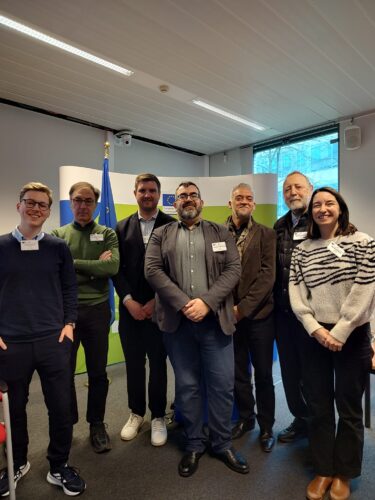
Representing Seaglow, Steffen Helledie (North Denmark EU-Office) presented the project’s approach and early experiences in piloting decarbonisation solutions under real operational conditions. His intervention emphasised several key elements that are central to Seaglow’s methodology:
– Testing technological solutions directly within fishing operations
– Working closely with fishermen to assess feasibility and practicality
– Identifying financial and regulatory barriers to implementation
– Ensuring that innovation pathways remain economically viable for small-scale operators
The exchange highlighted the importance of bridging the gap between technological development and operational realities at sea. Discussions also addressed the need for coherent support mechanisms, investment security and regulatory clarity to enable the uptake of alternative propulsion systems and energy solutions in the fisheries sector.
Moderated by Fernando Nieto Conde (CINEA – Horizon Europe Climate), the session fostered a constructive dialogue on how project results — including those generated by Seaglow — can feed directly into the development of EU policies and the forthcoming Energy Transition Roadmap.
For Seaglow, the workshop represented an important opportunity to strengthen synergies with peer projects, align efforts across funding programmes and contribute practical, field-based insights to EU-level policymaking.
Day 2 – High-Level Conference: Navigating Change
On 17 February 2026, Seaglow partners participated in the High-Level Conference “Navigating Change: Towards the Energy Transition in the EU”, which brought together policymakers, sector representatives, research organisations and industry stakeholders to discuss the strategic direction of the energy transition in fisheries and aquaculture.
The conference focused on advancing the forthcoming Energy Transition Roadmap and ensuring that it reflects both policy ambition and operational feasibility.
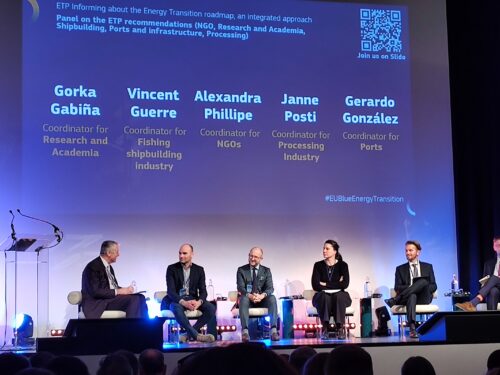
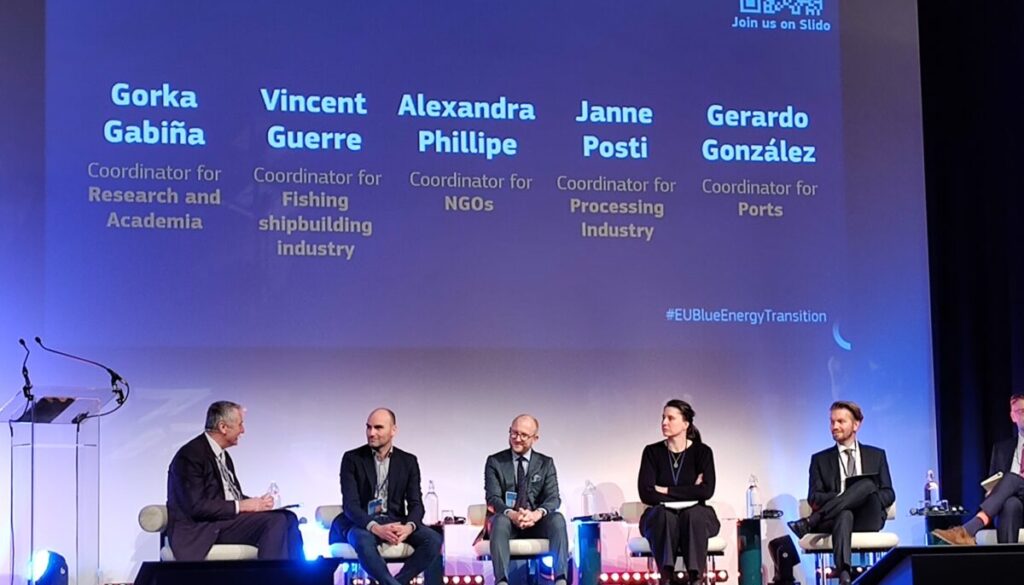
Seaglow representatives Marta Cavallé and Gorka Gabiña Iribar contributed to the panel discussions in their capacity within the Energy Transition Partnership (ETP) Support Group Coordinators on Small-Scale Coastal Fisheries and Research and Academia. Their intervention addressed the role of small-scale fisheries and research actors in supporting the transition process, highlighting the importance of practical implementation, stakeholder engagement and knowledge transfer.
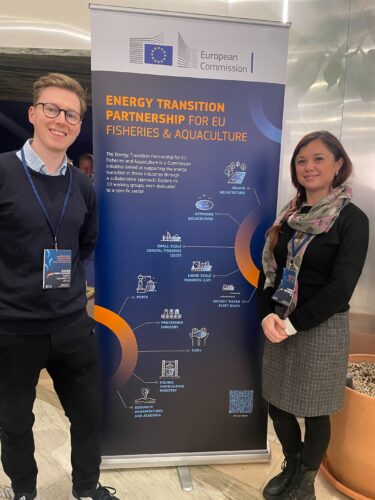
Seaglow partners Asger Christiansen and Claudia Orlandini were also present, engaging with participants and strengthening cooperation with peer projects and institutional representatives.
The conference featured high-level interventions outlining the EU’s ambition for the energy transition in fisheries and maritime sectors. Contributions were delivered by Costas Kadis, EU Commissioner for Fisheries and Oceans; Maria Panayiotou, Minister of Agriculture, Rural Development and Environment of Cyprus, representing the Presidency of the Council of the EU; and Timmy Dooley, Minister of State at the Department of Agriculture, Food, Fisheries and the Marine and at the Department of Climate, Energy and the Environment of Ireland, representing the upcoming Presidency of the Council of the EU.
In addition, Charlina Vitcheva, Director-General of DG MARE, presented the next steps towards the Energy Transition Roadmap, outlining the policy framework and expected milestones.
Throughout the discussions, emphasis was placed on the need to combine technological innovation with coherent regulatory frameworks, financial support mechanisms and coordinated action across initiatives. Particular attention was given to ensuring that the Energy Transition Roadmap remains grounded in operational realities and responsive to the needs of fishing communities.
For Seaglow, participation in the High-Level Conference provided an opportunity to contribute to EU-level discussions shaping the policy and regulatory framework for the sector’s energy transition.
Photo credits @Seaglow
 English
  Danish
  Dutch
Dutch  Estonian
  Finnish
  French
  German
  Latvian
  Lithuanian
  Norwegian
  Polish
  Swedish