
Matuojant tai, kas svarbu: kaip SEAGLOW žemėlapiuose laivų emisijas
Understanding how fishing vessels consume energy and produce emissions is a crucial first step towards reducing their environmental impact.
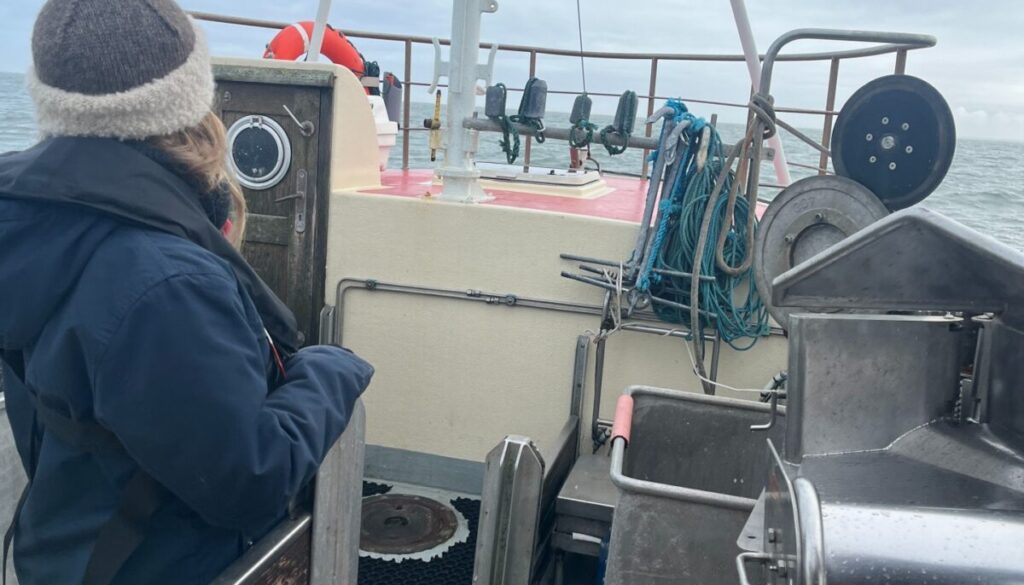
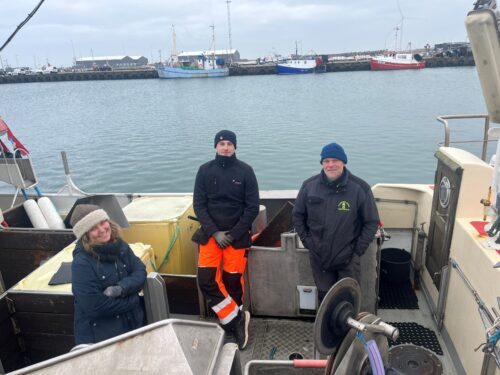
As part of this effort, partners Danish Technological Institute (DTI) and AZTI have recently completed an extensive campaign of baseline and emission measurements across Seaglow’s four pilot fishing vessels operating in Northern Europe. The vessels—Ester in Denmark, PMA-605 in Estonia, Anne Katharina in Norway, and Valentina in Sweden—represent a range of operational profiles typical of the region’s fleet.
At the heart of this work are the baseline measurements, which provide a detailed picture of how each vessel operates in real conditions. Rather than relying on assumptions, the project teams go on board to measure power demand, fuel and energy consumption, and overall operational behaviour directly at sea. Using specialised equipment to monitor fuel flow, engine speed (RPM) and torque, they capture how the vessels perform across different operating conditions.
These onboard measurements are complemented by continuous operational data from the Simul system installed by AZTI. Together, these datasets allow the teams to carry out detailed analyses of each vessel’s power and energy demand. Applying established engineering methods, they develop models that are used to determine the electrical power requirements and fuel capacity needed for future retrofit solutions under SEAGLOW.
Alongside this, emission measurements are conducted during normal sailing operations to understand what each vessel emits in practice. Using DTI’s mobile laboratory, engineers measure key exhaust gases—including nitrogen oxides (NOx), sulphur oxides (SOx), carbon monoxide (CO) and carbon dioxide (CO₂)—as well as particle emissions. Advanced instruments, including the Testo V350 Marine 2 and the Pegasor MI3, make it possible to link these emissions directly to engine load and vessel heading under different conditions, creating a comprehensive emissions profile for each vessel.
This work relies not only on technology, but also on strong collaboration. The vessel owners play a central role throughout the campaigns, welcoming the teams on board and sharing their in-depth knowledge of day-to-day operations. Their experience is actively taken into account during both the planning and execution of the measurements, as well as in the subsequent analyses, helping to ensure that the results are both accurate and practically relevant.
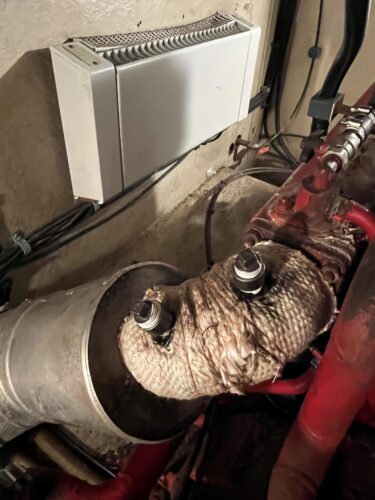
The final emission measurement campaign took place on 23 February 2026 aboard the vessel Ester in Hanstholm, Denmark. On a cold and foggy morning, engineers installed Pegasor measurement probes directly into the exhaust system, immediately after the engine, to capture emissions at source.
In relatively calm seas, the vessel was tested at five different load points while sailing in all four cardinal directions, resulting in a total of 20 measurement points. Flue gas emissions were sampled directly from the exhaust pipe throughout the tests.
Pictured: Pegasor, particle measurement instruments for environmental and emission monitoring of ultrafine particle concentration and size.
Despite the challenging conditions, the campaign was a success. It produced high-quality data, which is now being analysed by engineers at DTI and directly supports the next phase of SEAGLOW: equip the vessels with retrofit solutions that reduce fuel consumption and emissions.
Nuotraukų kreditai @Seaglow

 Lithuanian
  English
  Danish
  Dutch
Dutch  Estonian
  Finnish
  French
  German
  Latvian
  Norwegian
  Polish
  Swedish